do you actually put chocolate in your wine?
the truth behind tasting notes
have you ever read the back of a bottle or done a tasting and heard that your wine has notes of chocolate or strawberries, or maybe even something ridiculous like wet stones? thought it was weird? don’t worry, you’re not alone. tasting notes for wines shouldn’t be confusing and unapproachable, but let’s be real, they usually are. below we’re going to break down what tasting language actually means, because you shouldn’t need a diploma to enjoy wine.
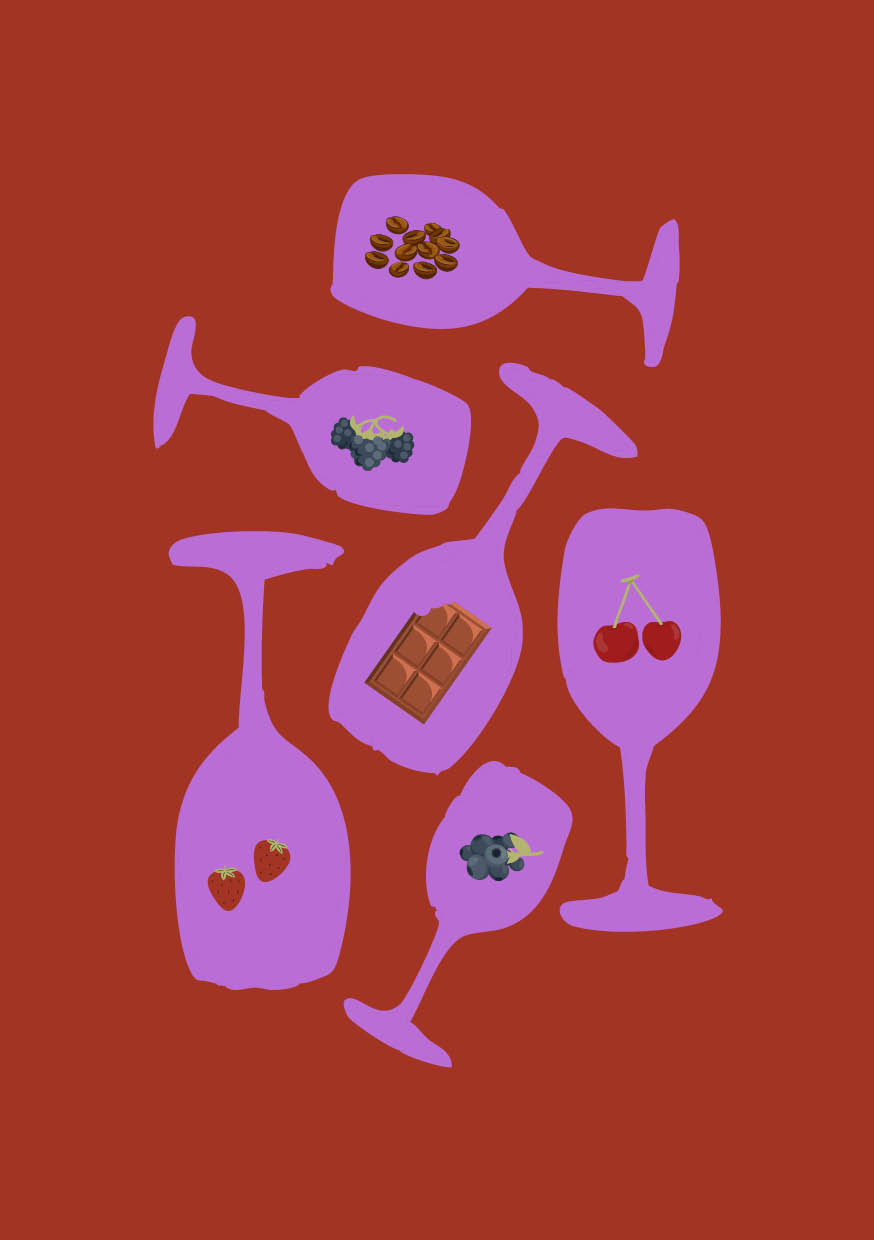
some people might think a winemaker dumps a handful of strawberries or a bar of chocolate into the wine when they’re making it. that would be impractical, expensive, and honestly probably illegal. the truth is tasting notes are just flavour descriptors. for example when we say that our red tastes like cherries, what we really mean is the wine kinda tastes similar to cherry. we should note that this is of course subjective – some may think it tastes like raspberry instead.
so where do these flavours come from? essentially, a lot of these flavours come from the grape itself. the natural chemicals in the skin and flesh of a grape can smell and taste like other fruits. and this can change for different varieties, for example, a white wine like a riesling might taste more like bright citrus fruits or green apple (this is partly caused by the acid). for reds, depending on the variety and style, you could get anything from bright cherry to dark blackberry.
other non-fruity flavours, like vanilla, coffee, or… you guessed it, chocolate, can come during the period of time the wine is in barrel. this is due to the ‘toasting’ or charring on the inside of the barrel. whilst the wine is in there, these flavours will gradually seep into it.
yes we use this language on labels, but it’s not super important. tasting notes are a guide there to make you think more about the wine itself, not a rule book. if it tastes good, it tastes good. if it reminds you of your mum’s christmas pudding, then that’s your tasting note. just drink the wine, enjoy the flavour and forget the fuss.